Dust prevention
Raises moisture in material before dust becomes airborne — pre-wetting and binders that reduce particle liberation at crushers, feeders, and transfer points.

Prevention and suppression systems engineered for mining circuits, haul roads, and underground airways.
Airborne respirable dust presents critical health risks and severe mechanical wear. The most effective programmes combine dust prevention at source with suppression of particles already in the air — sized to your circuit, water availability, and statutory dust limits.
Sites that only wet material — or only knock down airborne clouds — often leave gaps. We design programmes that do both: keep fines locked in the ore stream, and capture what still escapes into the air.
Raises moisture in material before dust becomes airborne — pre-wetting and binders that reduce particle liberation at crushers, feeders, and transfer points.
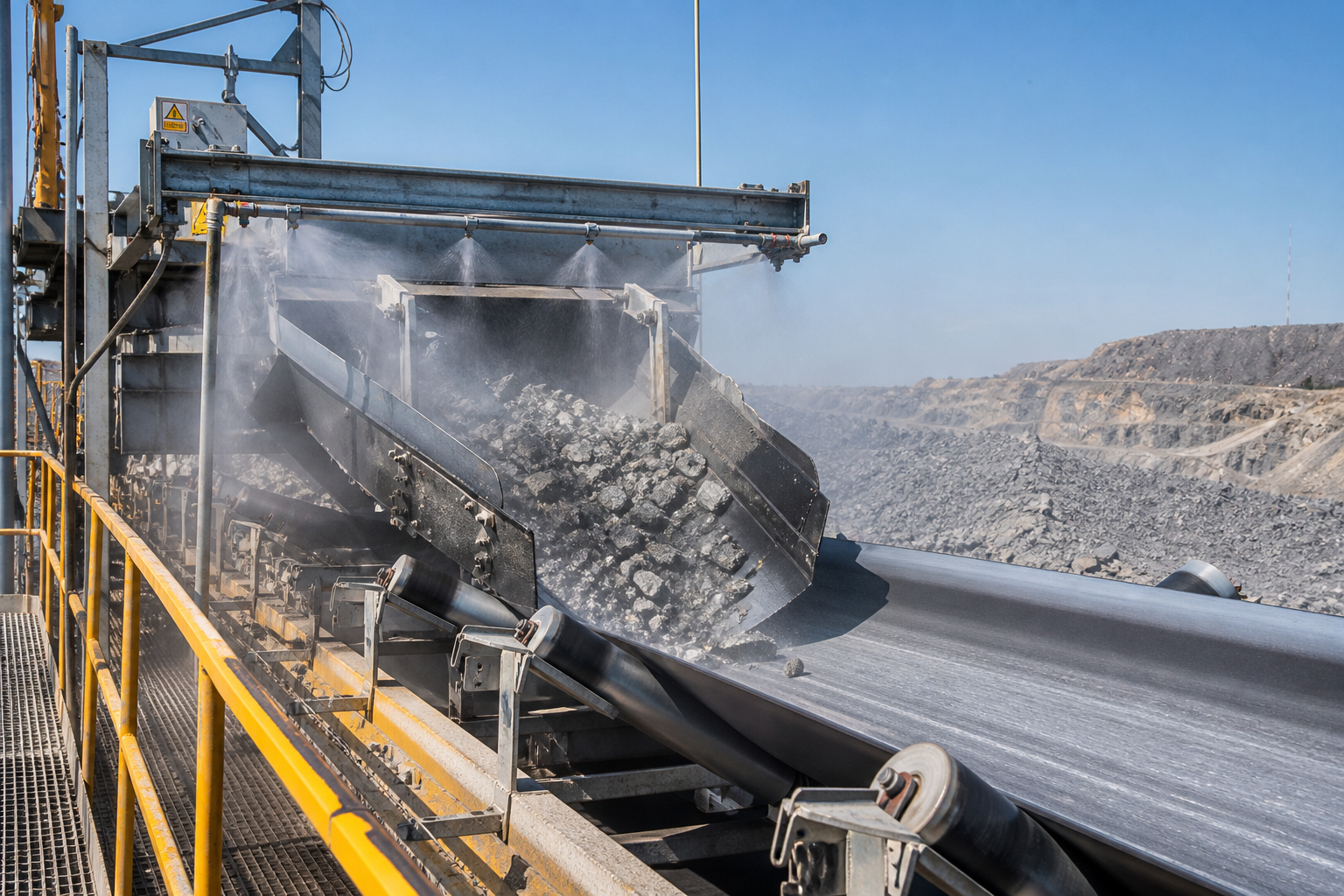
Knocks down dust already airborne with target-matched spray or fog so particles collide, agglomerate, and fall out of the air stream.
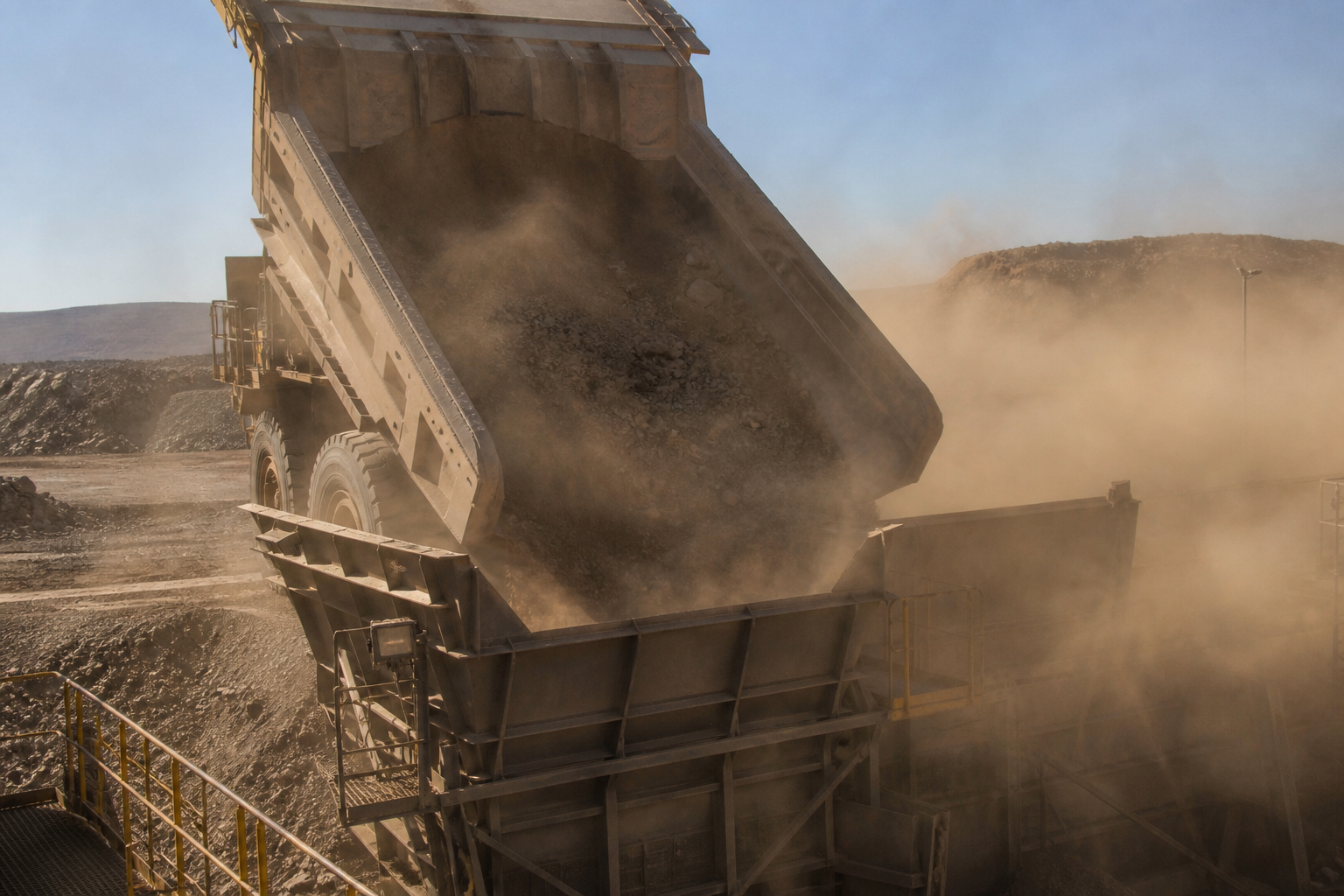
Pull the handle across each scene — the same before/after principle used on ROM bins and crushing circuits once misting and source wetting are applied.
Uncontrolled tipping throws a dense dust plume across the hopper and adjacent walkways. Source wetting plus mist curtains capture fines at the drop point and restore usable visibility around the tip.
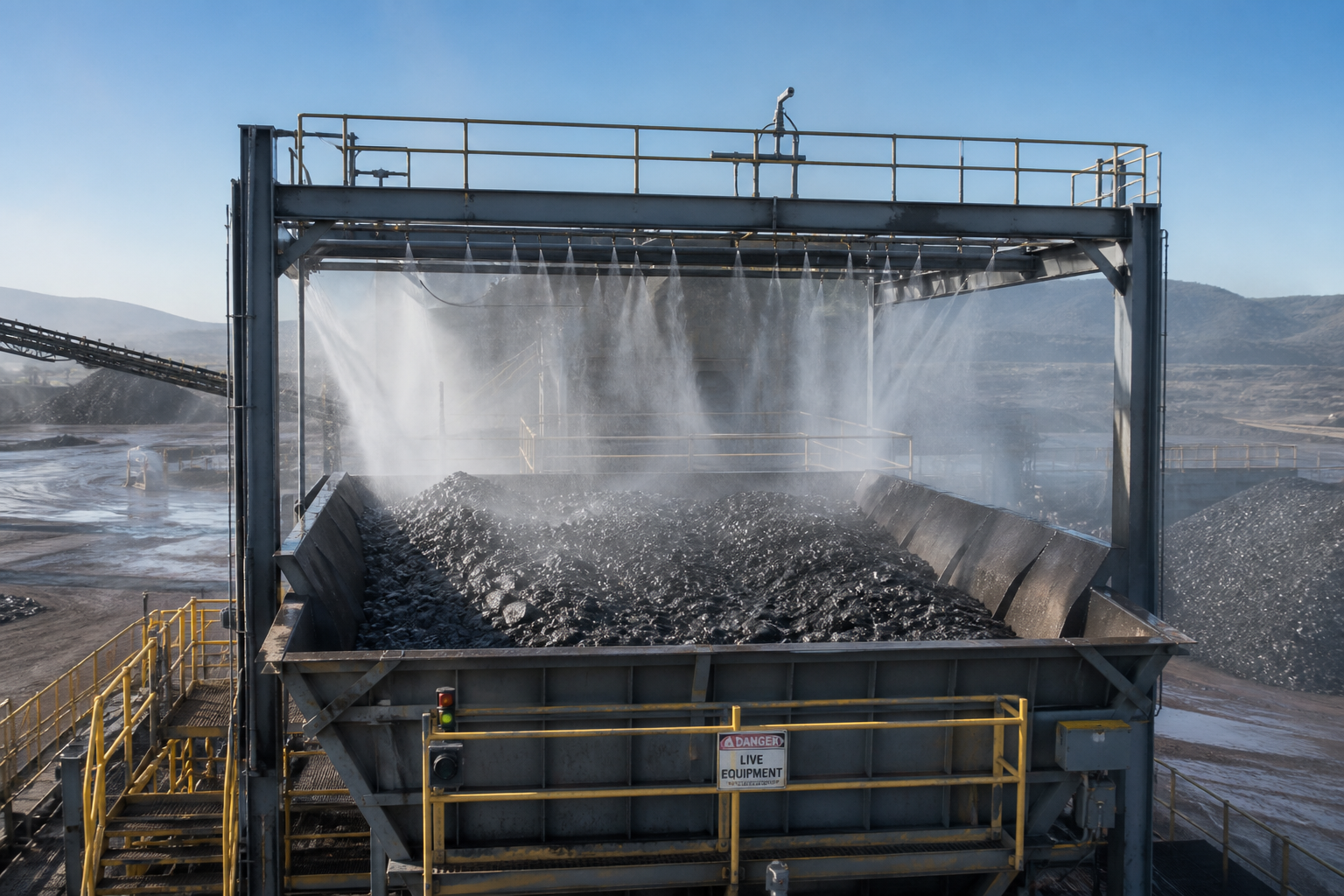
Chute discharges and belt transfers are classic fugitive-dust generators. Matched fog nozzles agglomerate airborne particles so they fall out of the airstream without flooding the ore stream.
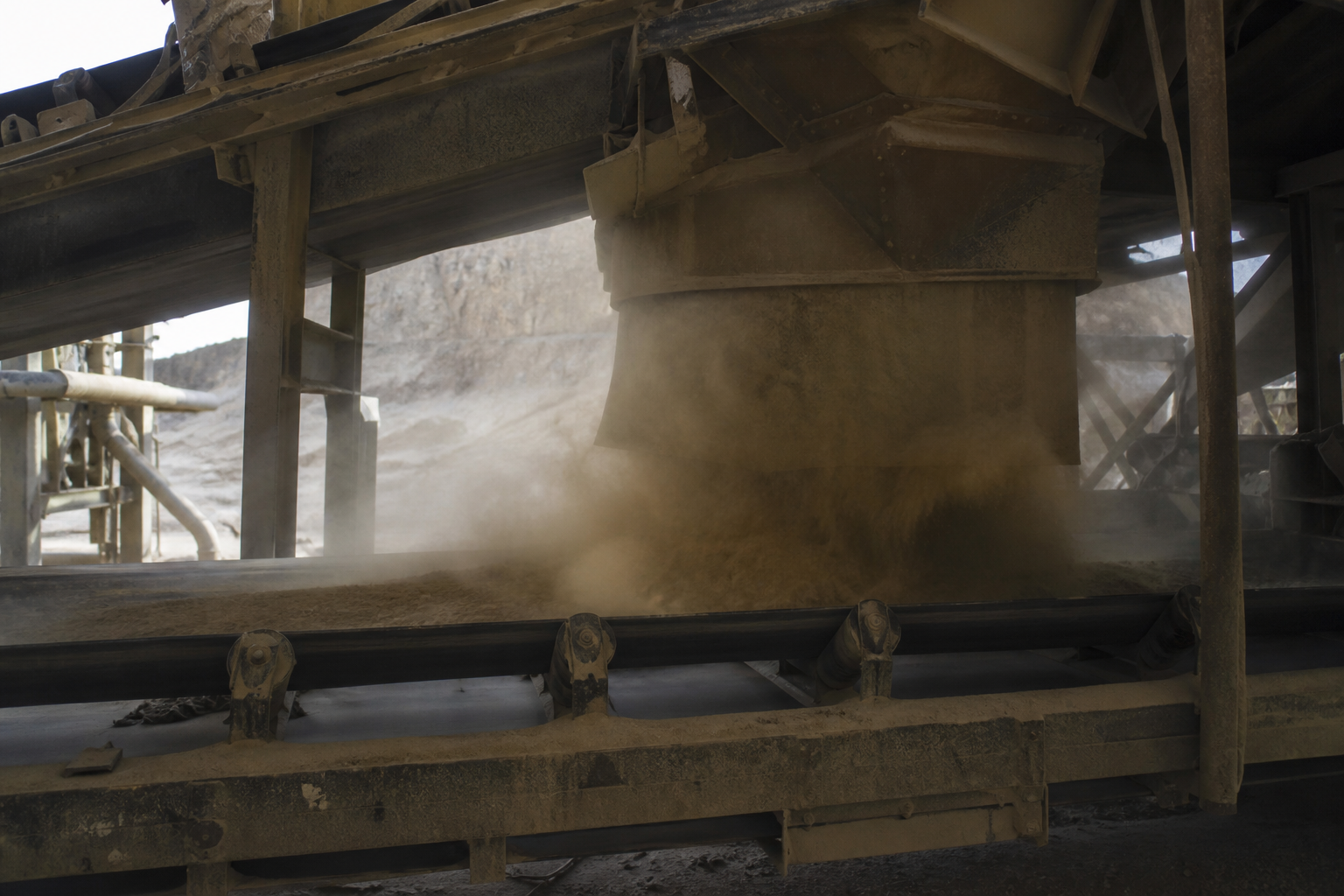
Falling productivity, climbing maintenance bills, and rising health exposure are classic early warnings that fugitive dust is winning.
Breathing fine mine dust over time is tied to serious lung disease. Silica, coal dust, and other particulates remain among the highest occupational risks on site.
Dust clouds cut visibility around tip points, haul roads, and plant floors — raising the chance of vehicle and pedestrian incidents.
When ambient dust stays above allowed limits, mines face audit findings, fines, and in severe cases production stoppages or personal liability for managers.
Dust is a major driver of abrasive wear and fouling. Industry analyses often link a large share of plant failures and rising maintenance spend to uncontrolled dust.
Mining and plant dust is not one problem. Particle chemistry changes the medical risk — which is why source control matters across silica-rich ore, coal, and diesel-heavy zones.
Spray and fog packages at ROM bins, crushers, screens, and transfer points keep dust from entering the air in the first place.
Medium- and high-pressure systems, and where needed cannon-style coverage, are selected against particle size, airflow, and water availability.
Binders and water-efficient suppressants stabilize fines on primary, secondary, and access roads, stockpiles, and exposed dumps.
Solenoid and pump control — and on larger plants SCADA-friendly packages — keep spray on only when material is moving, cutting waste and downtime.
Spreading control from the ROM bin through crushers, screens, and transfers lowers overall dust load so no single hotspot has to carry the whole burden.
Loading / ROM bins, feeders, grizzlies, crushers, screen feed and discharge, conveyor transfers, chutes, and head-chute discharges typically need matched prevention and suppression.
Medium- and high-pressure spray and fog packages sized to particulate density, water availability, and production rates — including underground ventilation and face areas where dust must be stopped at source.

High-pressure mist curtains and wetting networks designed for confined airway dust capture.

Dust cannons, transfer-point sprays, ROM fogging barriers, and haul-road binder distribution.
Our systems enable mine operators to maintain ambient dust levels well below statutory maximum allowable concentrations (MAC). By capturing dust particles at the source through target-matched fog and mist droplets, we help management ensure continuous compliance during regulatory audits while protecting worker safety.
Every installation is sized around particulate density, airway geometry, water availability, and production rates — so suppression works without over-wetting ore or creating secondary hazards.
We size prevention and suppression around your circuit layout, water constraints, and audit requirements.